
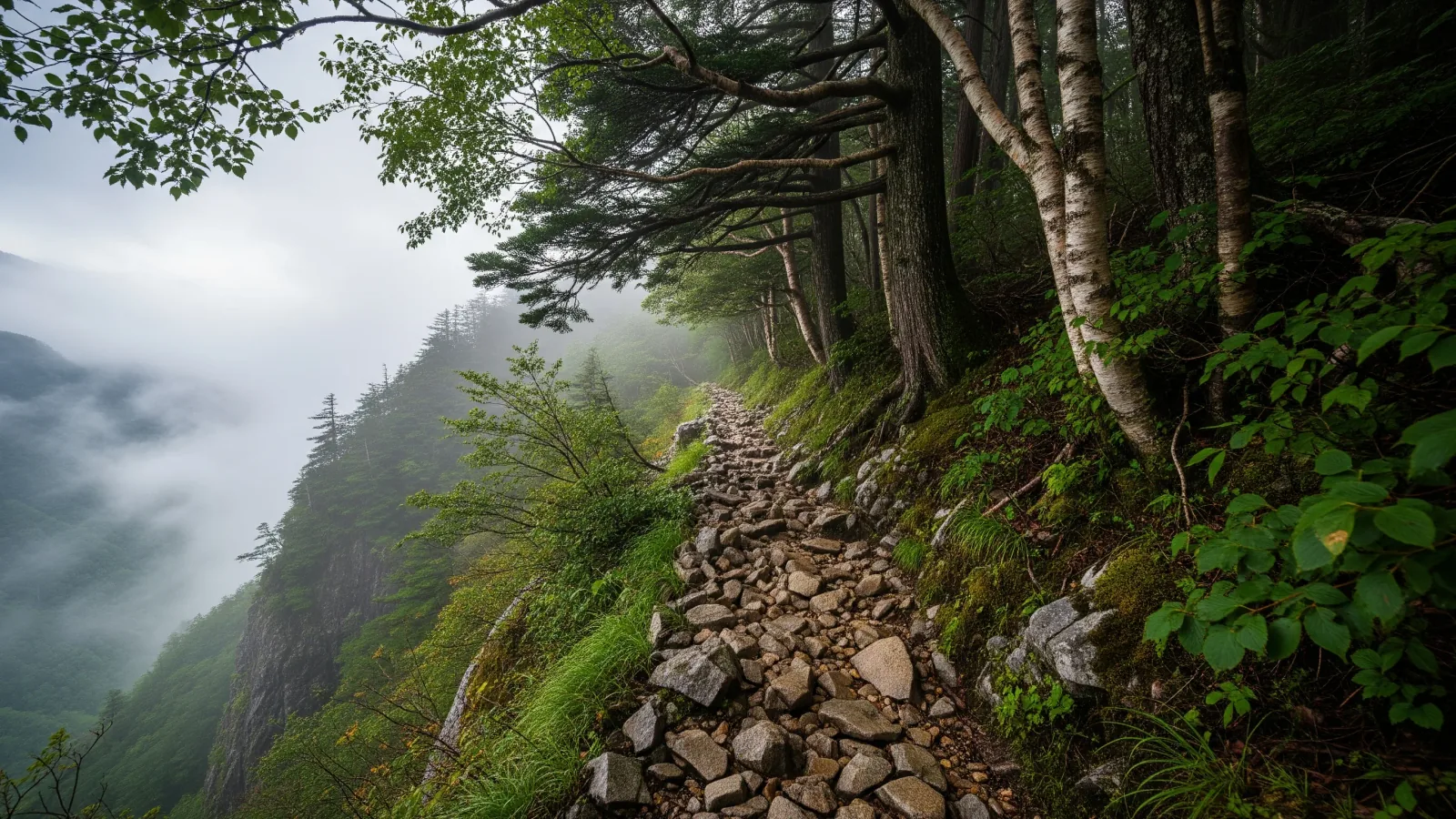
"News about mountain rescues is sad, but it doesn't really apply to me" — there's probably a quiet version of that running in the back of most hikers' minds. The truth is that incidents happen to ordinary hikers far more often than the framing suggests, and the statistics reveal clear, recurring patterns. This piece uses Japan's National Police Agency mountain-accident data to lay out what is actually happening in the country's mountains.
Why read the statistics as if they're about you
Accident statistics stack thousands of individual incidents into something you can actually see as a pattern. Reading one news story at a time, every incident looks like "a special situation that happened to someone else." Read at the statistical level, you start to notice that you fit the same conditions, or the same age bracket.
The National Police Agency publishes an annual summary of mountain accidents. The numbers in this article are drawn primarily from the figures the NPA published covering Reiwa 6 (2024).
Incident count and victim count — the scale of a year
According to the NPA, in Reiwa 6 there were 2,946 mountain incidents involving 3,357 victims. Of those, 300 were deaths or missing-person cases, and 1,390 were injured.
Bare counts don't always land. Reframed: around 3,000 hikers per year end up in a situation that requires rescue. That's 8 or 9 hikers somewhere in Japan, every single day, needing to be pulled off a mountain.
Trend-wise, the annual count has been moving between roughly 2,500 and 3,000 for some years. There were dips and bumps around the COVID period, but in the long run the level is described as "persistently elevated."
The age skew — what "senior hiking" actually looks like
The most distinctive feature of the data is the age skew. For Reiwa 6, 79.8 % of victims (2,678) were aged 40 or above, and 50.0 % (1,677) were 60 or above.
Narrow it to fatalities and missing-person cases, and the skew sharpens: 91.7 % aged 40+, and 64.0 % aged 60+. The most serious incidents are heavily concentrated in middle-aged and older hikers.
This reflects two things at once. One: there are simply a lot of older hikers active in the mountains, so total incident counts skew older. Two: the same fall, the same fatigue is more likely to escalate into something serious in an older body. Whether you're picking hiking back up in your 30s or 40s, or starting from scratch in your 60s, this means age-appropriate conditioning and gear choices are non-optional.
Cause patterns — getting lost, falls, and slips
Looked at by cause (how the incident happened in the first place), the top categories are:
- Getting lost: the single largest category. Most visible on low and mid-elevation mountains.
- Falls (tripping / collapsing): typically on descent, when you're tired or the trail is wet.
- Slips (slide-falls down terrain): on high mountains and rocky ridges. The category most likely to be fatal.
- Illness and fatigue: covers things like medical issues, dehydration, and hypothermia.
"Slip" tends to make people picture steep rocky terrain, but the actual leading category is getting lost. Even on a low mountain, multiple worn paths or a long stretch of similar-looking forest can fool experienced hikers into a wrong turn. Using a GPS app and checking your position regularly is genuinely a foundation of accident prevention.
What the numbers tell you about your own preparation
Looking at the statistics is only worth doing if you turn it into something you change about how you hike.
① Don't-get-lost basics are required for everyone
The hikers most confident they won't get lost are the ones who respond slowest when they do. Run a GPS app the entire hike, check the map at regular intervals, and turn around if you're unsure rather than "trying one more thing." A surprising amount of the annual incident count would simply not exist if these three habits were universal.
② Pace and route management appropriate to your age
Older hikers cannot necessarily climb at the same pace as their younger selves. Customise published course times to your own pace, build in extra breaks, and have escape routes mapped before you start. The older the hiker, the more margin the plan needs.
③ File a climbing plan and set up emergency contacts
When something does go wrong, the starting points for a rescue are the climbing plan you filed and the route information you shared with family or work. Without those, the search area expands enormously and the rescue is dramatically slower. Use the online options (Compass, YAMAP, etc.) — there's no friction left.
④ Be honest about the cost of hiking alone
Solo hikers tend to be found later, which means injuries that would have been minor turn into something much worse. Where possible, hike with others. Where it isn't, share a detailed plan with family or work so someone outside the mountain knows what to do if you're overdue.
Note: the figures in this article are drawn from the National Police Agency's "Mountain Accident Overview" report for Reiwa 6 (2024). For the most current year's numbers, refer to the corresponding annual publication.
Summary
Mountain accident statistics are the most objective tool there is for turning "someone else's problem" into "my problem." About 3,000 incidents, over 3,000 victims a year, with around 300 deaths or missing-person cases, the majority of them middle-aged or older — that's information every hiker in Japan should be carrying.
Reading the numbers isn't about judging anyone. It's about revisiting your own preparation. Don't-get-lost habits, pace management, filed climbing plans, honest solo-hiking risk awareness — start with the one closest to where you are. The most effective prevention any community has is a culture in which we share the statistics with the people we hike with and stop repeating the same mistakes.