
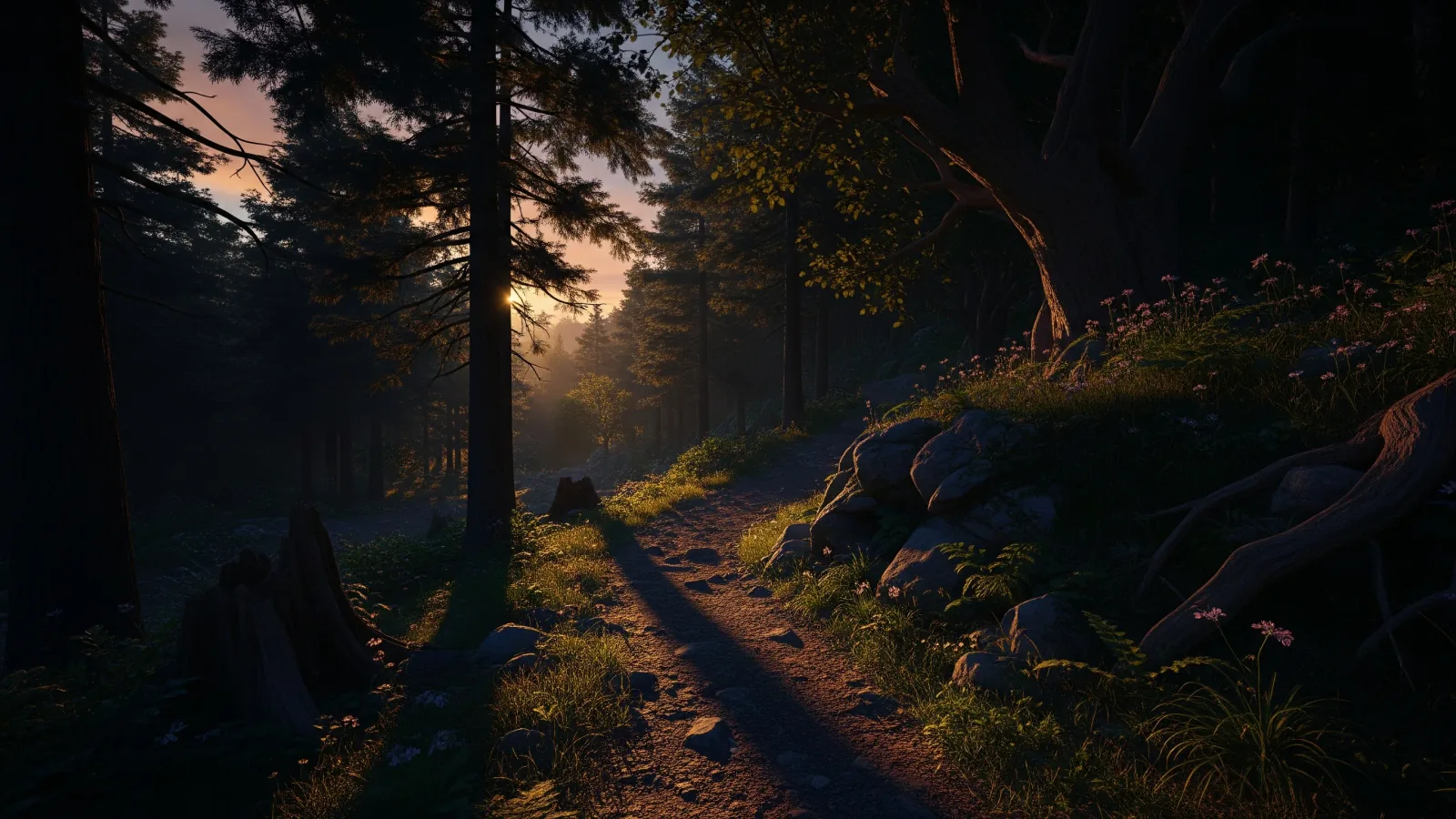
"It's just a day hike — I don't need a headlamp, right?" If that's where you are, pause for a moment. One of the recurring causes of mountain incidents in Japan is hikers becoming immobile after dark. Even on a day hike, getting off-route or running out of energy can push you well past sunset. This guide explains why a headlamp is non-negotiable hiking gear, and what to actually look at when choosing one.
"It's a day hike, I don't need one" is the most dangerous assumption
First, where a headlamp sits in the hierarchy of hiking gear. The standard "three essentials" of hiking are usually given as boots, pack, and rain gear — the headlamp comes right after that. Despite which, it is one of the items beginners most often forget to put in the pack.
The line of reasoning "I'm doing a day hike, I'll be off the mountain before dark" hides a serious flaw: on a mountain, things stop going to plan as a matter of routine. Picture the scenario. You were on course time, took a wrong turn, lost 30 minutes going back and rejoining the trail. The mistake makes you rushed and tired, so your pace drops. Look up and the forest is already getting dim.
Dark on a mountain is not the same thing as dark in a city. No streetlights, and where the canopy blocks the moon you can barely see the ground. Walking a rooted, rocky trail in that condition spikes the risk of tripping and falling dramatically. A headlamp isn't "a tool for when it gets dark" — it's insurance for the situation you didn't plan for.
Three things to look at when choosing a headlamp
So what do you actually pick on? Hiking headlamp specs come with a wall of numbers; the three a beginner should focus on are:
Brightness (lumens)
Brightness is measured in lumens (lm). As a general baseline for hiking, at least 100 to 200 lumens is a comfortable target. One caveat: lumen number alone doesn't tell you everything. Two headlamps with the same lumens can behave very differently depending on whether the beam spreads wide or throws far. If you can, switch one on in the store and look at how the light actually distributes.
Power source
Power comes in two main forms: replaceable batteries and built-in rechargeable (typically USB). Each has trade-offs.
- Replaceable batteries: carry spares and you're set even on multi-day trips. Easy to source, and relatively stable in cold conditions.
- Rechargeable: economical over time, often lighter. The risk is forgetting to charge — and finding out about it on the mountain.
Neither is strictly better. Pick what fits your hiking style. If you can't decide, starting with replaceable batteries — because managing spares is simpler — is a reasonable default.
Weight and water resistance
Headlamp weight is typically around 100 to 200 g with batteries installed. For a day hike you don't need to obsess over grams, but you do want it light enough that you'd never look at it in your pack and think "eh, I'll leave it."
On water resistance, IPX4 or above (rated against splashing water from any direction) is a sensible baseline. Rain happens without warning on mountains, and even sweat will reach the headlamp on a hard day. The exact level of protection you need depends on the conditions you hike in — refer to the manufacturer's specs for detail.
The use and maintenance habits most people don't know
Buying the headlamp isn't the end. The small day-to-day habits are what make sure it actually works when you need it.
First, do a function test before every trip. Check the battery. Rechargeable: confirm it's actually charged. Replaceable batteries: confirm the spares are in the pack. "It worked last time, it'll be fine" is the assumption that produces the classic story — the lamp doesn't switch on at the moment you actually need it — and that story is common enough among experienced hikers that you should defend against it.
The other thing that matters is where the headlamp lives in the pack. The unbreakable rule: put it in the top lid or in a quick-access pocket. Buried at the bottom of the main compartment, you end up scrabbling for it in falling light — which is itself dangerous.
And if the lamp is going to sit unused for a while, take the batteries out. Battery leakage in a lamp left full can destroy the unit.
Summary
A headlamp belongs in the pack on every hike, day-hike included. Things running late, a wrong turn, sudden bad weather — mountains operate on the premise that plans don't survive contact, and the headlamp is the last line of safety when that happens. Pick on brightness (100–200 lm as a reference), power source, and weight plus water resistance — and aim for the model that fits your kind of hiking. Then build the pre-hike function check and the right storage habits. A small lamp like this materially changes how much margin you carry into the mountains.