
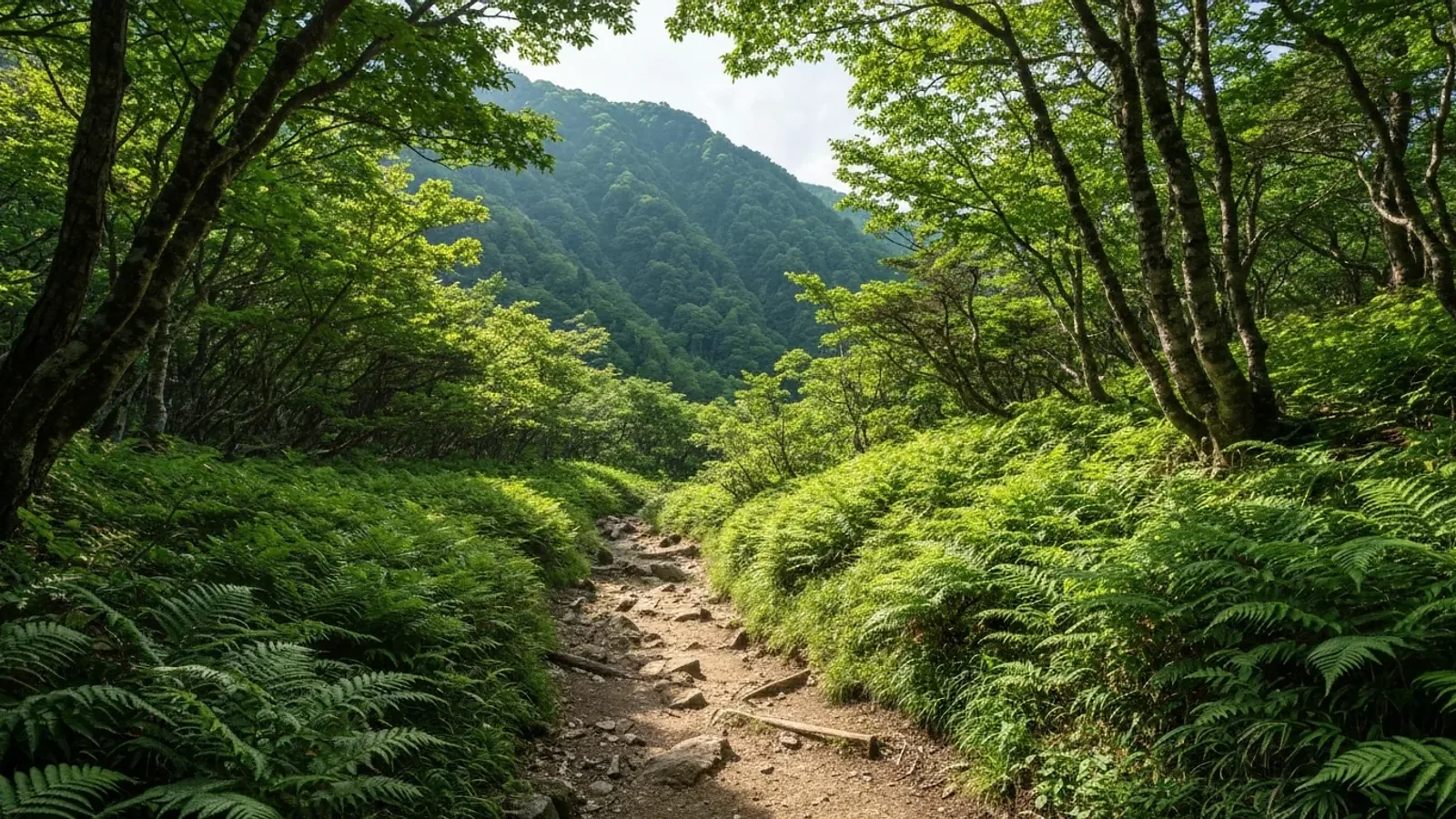
Have you ever been hit by stomach cramps in the middle of a hike with absolutely nowhere to go? No buildings anywhere, other hikers passing both directions on the trail — even imagining it is enough to break a sweat. Toilets in the mountains aren't just a comfort question; they sit at the centre of how the natural environment of the mountain itself holds up. This guide covers how a portable wag bag actually works, and why packing it out is the only acceptable option.
Mountains don't always have toilets — start with the reality
A lot of hikers assume that trails have toilets at sensible intervals. The reality on many routes is that there are toilets only at the trailhead and at huts — and on quite a few routes, none at all between the two.
Daisetsuzan National Park in Hokkaido, for instance, has dramatically fewer huts and permanent toilets than the major ranges on the main Honshu island. The result is documented damage: alpine plants killed off by human waste, soil eroded around informal toilet spots. According to the Hokkaido Regional Environment Office of the Ministry of the Environment, hikers stepping off-trail to relieve themselves has expanded bare ground, degraded the landscape, and started to contaminate water sources.
What matters here is checking where the toilets are during the planning stage, not on the day. Most hiking maps and apps mark toilets on routes. Sort it out before you leave home. Hut toilets typically cost a small fee (around ¥100–300 is a common reference, though it varies by region and facility), so carry coins.
"Look up where the toilets are." Just that one step removes most of the anxiety about toilets in the mountains.
What a portable toilet (wag bag) actually is — and how to use one
The three parts of a wag bag
A portable hiking toilet — what English-speaking hikers usually call a "wag bag" — breaks down into three components.
- Waste bag: the inner plastic bag that catches the waste directly. Waterproof.
- Solidifying powder: absorbs liquid, solidifies the waste, and suppresses odour.
- Odour-proof outer bag: a tightly sealable bag that the used waste bag goes into for carry-out.
Most products bundle all three together. Folded down, the whole kit weighs only tens of grams. It fits in a pack side pocket and adds almost nothing to your load.
How you actually use it
The part beginners can't quite picture is what this looks like in practice. The basic procedure is:
- Pick a spot a short distance off the trail, out of sight of other hikers.
- Open the waste bag and set up the solidifying powder.
- Squat and use the waste bag directly.
- Used toilet paper goes into the waste bag too.
- Seal the waste bag thoroughly, then put the whole thing into the odour-proof outer bag.
The detail people most often miss is opening the kit once at home, in calm conditions, before you ever take it up a mountain. The first time you open one on a trail under pressure, you can end up fumbling the assembly or panicking about how the powder is supposed to work. One dry run at home — just to look at how the parts fit together — makes the on-mountain version straightforward.
Some regions have built portable-toilet booths along the trails. The booths usually contain a real seat, which makes them dramatically more comfortable, and where collection points are set up nearby, you can drop your used bag at the collection point instead of carrying it home. Whether collection exists, and what its rules are, varies by region — check the current information for the specific area or local authority.
Why "pack it out" matters — what going to the ground does to the mountain
"Won't it just decompose in the soil?" — it's a reasonable-sounding question, and the answer is no, not on a useful time scale. The microbial activity that handles decomposition in lowland soil is drastically reduced in the harsh conditions of the high mountains. Especially at high elevations with low temperatures, the rate at which organic matter breaks down collapses.
Worse, many hikers doing the same thing in the same places stacks up. The nitrogen and phosphorus in human waste accumulate in the soil. Plant species that don't belong there start to take over, displacing the alpine flora that actually evolved to live there. Water sources become contaminated, which is a direct safety problem for every hiker who comes through later.
Against this background, Japan's Ministry of the Environment has been actively promoting portable-toilet use as part of conservation policy in the national parks. In Daisetsuzan, 18 different mountain organisations signed a joint "Portable Toilet Promotion Declaration" in 2018, and coordinated effort has been ramping up since.
Note also that many mountain areas in Japan are protected under the Natural Parks Act, and dumping human waste or tissue outside designated locations can also fall under the Waste Management Act. Check the current rules for the specific prefecture or mountain area.
The framing isn't "my one time won't matter." It's "if every one of us packs it out, the mountain stays clean." That mindset is the first step in becoming a real mountain user, not just a guest.
Summary — a little prep, a lot less anxiety
Mountain toilets are one of those topics where knowing the basics dramatically changes how comfortable you are. To recap: check the toilets along your route before you leave, carry at least one wag bag in your pack, always, and pack out anything you use. Hold to those three and the entire toilet question shrinks down to a non-issue even on your first hike.
Hiking is, fundamentally, putting yourself in the middle of the natural world — and that's exactly why looking after it matters. None of this is complicated. A small amount of preparation and a little correct knowledge protect both your comfort and the environment of the mountain at the same time. The most experienced hikers do these things instinctively, as basic etiquette. The more we share the knowledge across the community, the better the culture of the mountains we leave for the people coming next.