
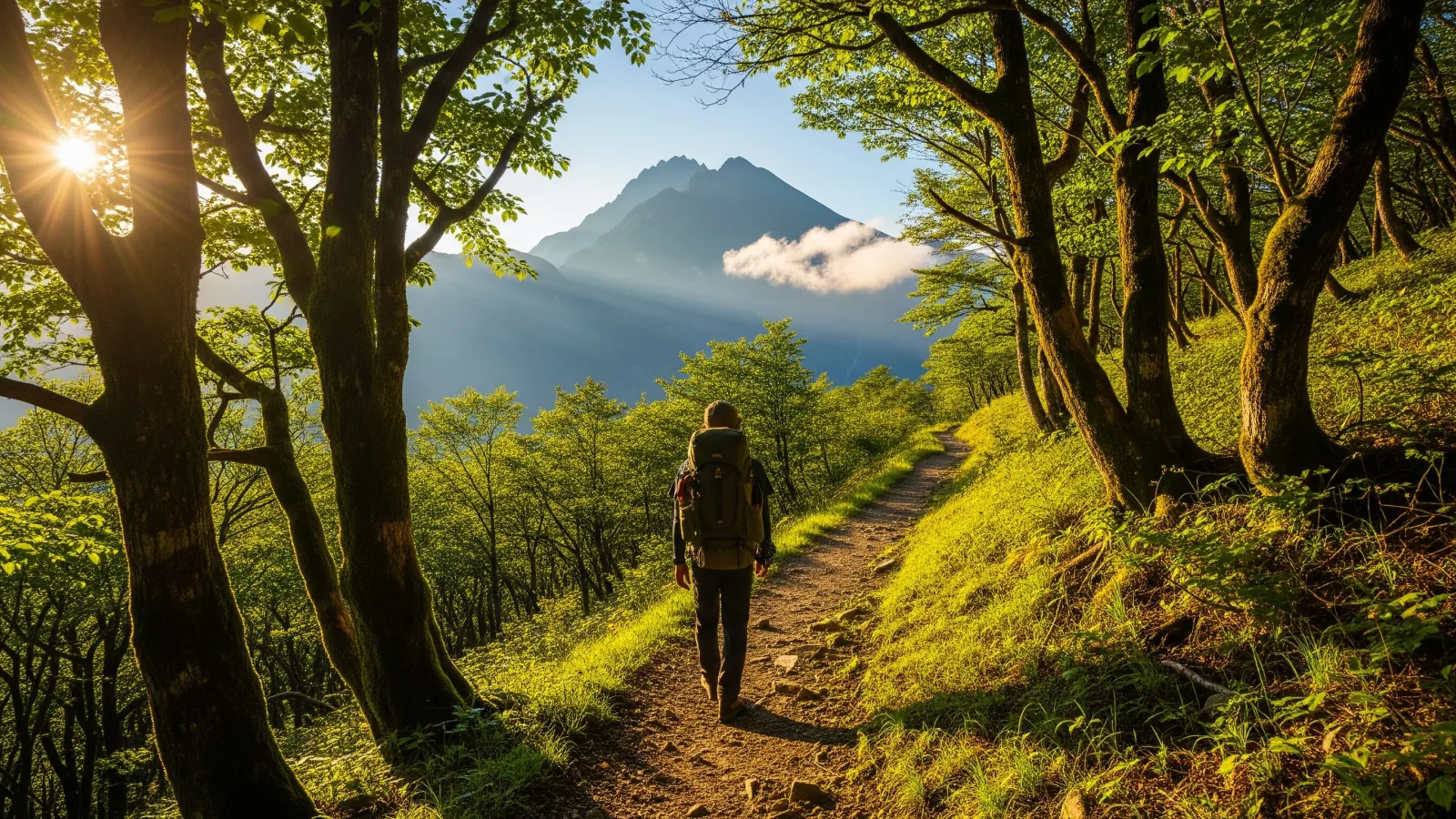
Two people carrying identical loads, one moves easily and the other is gassed an hour in — the gap isn't always fitness. Often it's the packing. How you load a hiking pack makes a meaningful difference in how it feels to wear. This piece walks through the three principles that matter: centre of gravity, accessibility, and left–right balance — and the reasoning behind each.
Good packing comes down to where the centre of gravity sits
The most important thing about packing is where the centre of gravity of the loaded pack ends up. The headline answer: heavy items go close to the back panel, around shoulder-blade height.
Why that position? When a person walks upright, their own centre of mass sits just above the pelvis. If the pack's centre of gravity sits far from that point, the body compensates — leaning forward, swaying side to side. That compensation burns extra muscle effort, which accumulates as fatigue.
A practical placement template:
- Top of the pack (near shoulder height): things you'll use while moving — rain shell, trail snacks.
- Centre, against the back: the heavy things — water, food, cookset.
- Bottom: light and bulky — sleeping bag, spare clothing.
- Top lid and side pockets: small things you need right away — map, sunscreen, tissues.
Beginner misconception worth clearing up: "heavier stuff goes at the bottom for stability." That's true for a daily shoulder bag; for a hiking pack, no. A hiking pack is engineered to transfer load to the hips through the hip belt. Put the heavy stuff in the bottom and the centre of gravity drops too low, which on the move tugs the pack backward. On a steep climb you feel it pull your torso back, which is exactly the wrong direction.
There is a nuance, though. On routes full of rocks and ladders, a slightly lower centre of gravity can feel more stable. Stay aware of the terrain you're walking and tune the placement; it makes the day noticeably better.
Accessibility is directly tied to safety
The second principle is to place items so that what you need is reachable when you need it. This is about safety, not just convenience.
Picture sudden bad weather on an exposed ridge. If your rain shell is buried at the bottom of the pack, you're opening the whole pack in strong wind, fishing through everything else, and getting soaked while you do it. Body heat dropping faster, and now there's a real risk of gear blowing off the ridge.
Sort gear by how often you'll reach for it:
- Need right away (top lid / pockets): rain shell, trail snacks, water, headlamp, first-aid kit.
- Need at breaks (upper): mid layer, lunch, sunglasses.
- Don't need while moving (bottom / deep): sleeping bag, tent body, spare clothing.
Especially the headlamp and rain shell — those go where you can reach them in seconds on every hike. Even on a day hike on a low mountain, schedule overruns and sudden weather changes happen. Don't pack them as "I won't need this" — pack them as "I might."
Experienced hikers tend to have fixed locations for every item — the same thing in the same pocket every time. That way, even in low light, you can locate something by feel. That's a habit that develops over many trips. As a starting move, even just deciding "rain shell lives under the top lid, always" produces a real improvement.
Mind the left–right weight balance
The third principle is symmetry left to right. If one side of the pack is heavier, your body leans as you walk, which makes balance harder to hold. On traversing sections and through rocky terrain, that lean translates directly into fall risk.
The basic technique: place heavy items like water bottles symmetrically on both sides. Water on one side pocket? Put something of equivalent weight in the other. Inside the pack body, if the cookset goes on one side, group food on the other. Be deliberate about the distribution.
After packing, get into the habit of lifting the pack by both shoulder straps and feeling the left–right weight before you put it on. It's a small thing — but the difference in fatigue over a several-hour hike is much larger than you'd expect.
While we're on weight in general: for a day hike, the rough reference is 5 to 8 kg total pack weight including kit. Fitness, body size, and route difficulty all push this around — treat it as a guideline, not a rule.
Summary
The three principles of packing: "centre of gravity close to the back and high up", "placement follows use frequency", and "left and right balanced". Just keeping these three in mind changes how the same load feels to carry.
Don't treat the first packing as final. Every hike you'll notice things — "that was hard to reach," "one shoulder hurt by the end" — and you fold those observations into the next pack. That iteration is how you find the packing that's right for you specifically. On your next trip, just try moving one heavy item to a new position and see what changes.