
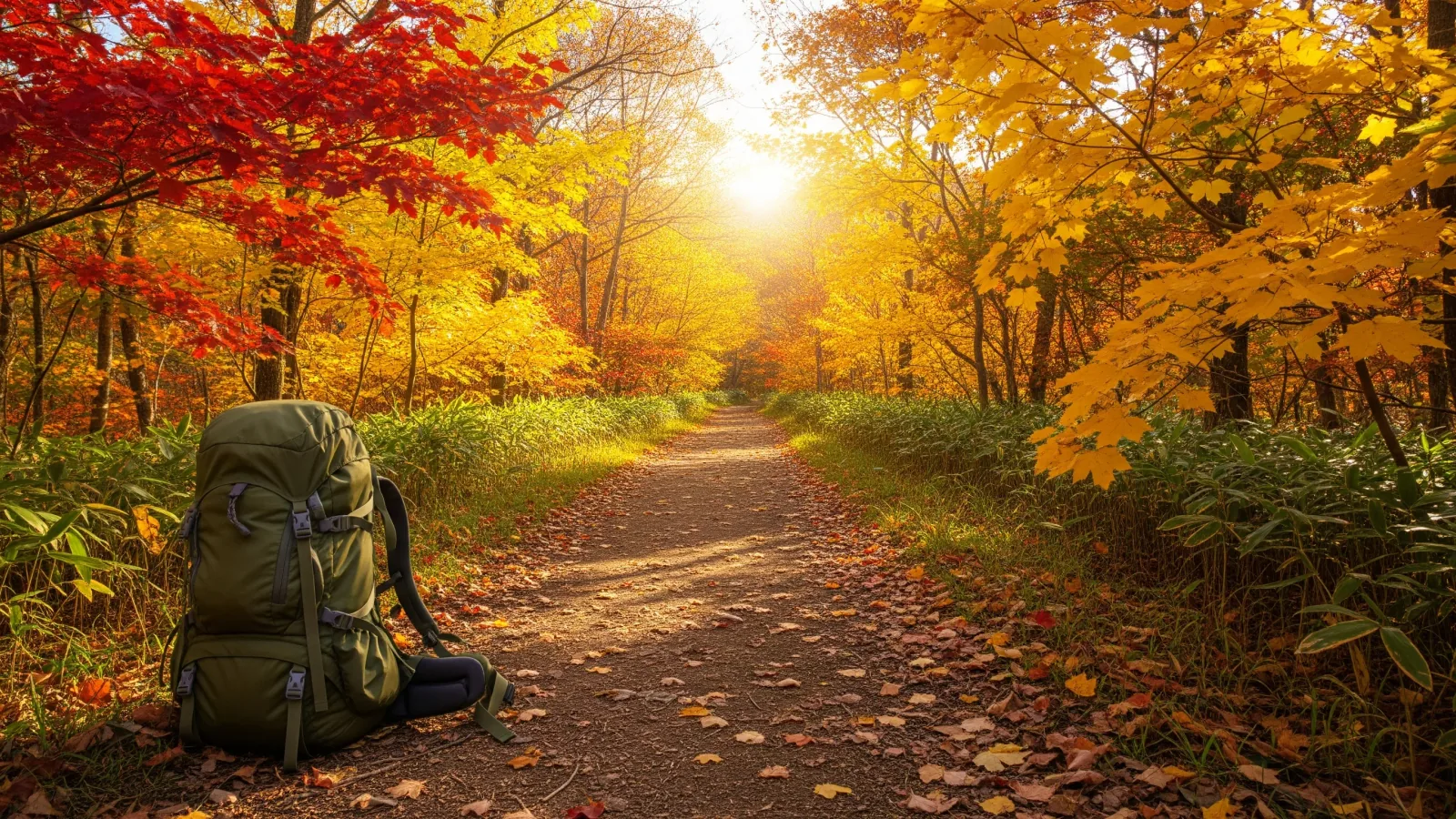
Ever taken a 60-litre pack out on a day hike thinking "bigger is safer"? It's a classic mistake. A pack that doesn't match what you're actually doing burns extra energy and lets your gear shift around inside it, which messes with your balance. This guide breaks hiking packs into four volume bands, with the uses and the picking points for each. By the end, the right size for your next trip should be obvious.
Before you pick a volume — the framing that matters
Pack volume is given in litres (L), but the optimal number depends on what you're carrying, for how long, and in what season. The common misconception is "bigger volume = more versatile". In practice, too big has real downsides.
If you put a small load in a large pack, gear slides around inside and your centre of mass becomes unstable. That matters most where balance counts — rocky pitches, ladders. There's also the weight of the pack itself. Bigger packs use stiffer frames and heavier fabric, and the empty weight can differ by 1 to 2 kg or more between sizes (varies by product).
So the principle is "pick the volume that's necessary and sufficient for the kind of hiking you actually do". Now, what each band is actually for.
20L — the light partner for day hikes
Around 20L is sized for day hikes on low mountains and trail walks. Water bottle, trail snacks, rain shell, map, basic first-aid kit — the standard day-hike kit fits neatly.
What's great about this size is low weight and freedom of movement. The pack itself weighs little, the body fit tends to be close, and you can keep a snappy pace. If you're just starting out and "I want to try hiking" is the brief, beginning with a 20L on your local low mountain is a sensible, unstrenuous starting point.
Caveat. 20L leaves almost no room for winter insulation or spare clothing layers. Depending on season and terrain it can fall short, so think of this as squarely "summer day hikes on low mountains".
30L — the day-hiking standard, and a great first pack
Ask experienced hikers what to buy first, and a large share of them will say a pack around 30L. With a full standard day-hike kit — rain shell jacket and pants, mid layer, water and snacks, headlamp, first-aid kit, map — there's still working margin in the bag.
The reason 30L stretches so far is season-spanning versatility. In summer, even a light load doesn't fall apart structurally; in autumn and winter you can add a heavier layer and a thermos. With a hut stay where bedding is provided on-site, it can handle a single-overnight trip too.
What to actually check when buying: back length (torso fit). Even at the correct volume, the wrong torso length throws load onto your shoulders or your lower back. Try the pack on in the store with some weight in it, and confirm that the hip belt actually transfers the load onto your hips.
The common beginner mistake — "I'm not using the hip belt"
A surprising number of new hikers don't tighten the hip belt and end up carrying the pack on their shoulders alone. Hiking packs are designed to put roughly 60–70 % of the load weight onto the hips via that belt (the exact ratio varies by body shape and pack design). Walking with the belt loose, your shoulders ache and your upper body is pulled backward, which compounds fatigue. After you buy a pack, have a shop staff member or an experienced hiker show you how to wear it properly.
45L — the doorway into tent camping and traverses
Want to sleep in a tent instead of a hut, or step up to a two-night traverse? That's where around 45L comes in. Tent, sleeping bag, sleeping pad, cookset, food — your entire on-mountain household — fits, with some margin left over.
From 45L upward, frame structure and fitting start to matter much more. Total loaded weight can pass 10 kg easily (the exact number varies a lot with season, trip length, and what you bring), and how well the pack transfers that load to your pelvis is the main thing separating comfort from misery.
Before deciding on this size, take a moment to ask yourself "how many nights am I actually going to be out?" and "what season am I going to be doing this in?" A summer 1-night tent trip is fine on 45L; for winter, or for longer traverses where the gear stack grows, the next band — 60L — may be what you actually need.
60L — high volume for long traverses and winter loads
60L and up is where you go for long traverses of three or more nights, and for winter mountaineering — situations where you simply have a lot of gear to move. In winter, with crampons, ice axe, heavier insulation, and higher-calorie food, your kit can roughly double compared with summer.
In a pack this size, the skill of packing becomes a major part of how comfortable the day is. The standard rule of thumb is to put heavier items centred and slightly high against your back, which tends to keep the centre of mass stable — but the actual best balance shifts with terrain and body shape. If you ever get a chance to learn packing from an experienced hiker or guide directly, take it.
Note that 60L is plainly overkill for day hikes and short trips. "Bigger covers smaller" does not apply to backpacks. The right move is to match volume to use — that's what ends up being most comfortable and safest, across the board.
Summary
Picking pack volume isn't about "more is safer" — it's about picking the volume that's necessary and sufficient for your hiking style. 20L for day hikes on low mountains, 30L as the day-hiking standard, 45L for tent camping and traverses, 60L for long traverses and winter. These are starting reference points; what's optimal for you shifts with body shape, gear list, and season.
For a first pack, starting with 30L and then adding purpose-specific sizes as your hiking style settles is a clean approach. The single most important thing, though, is to try the pack on in the store with weight in it. The numbers don't tell you about fit, and fit is what makes the day on the mountain comfortable.