
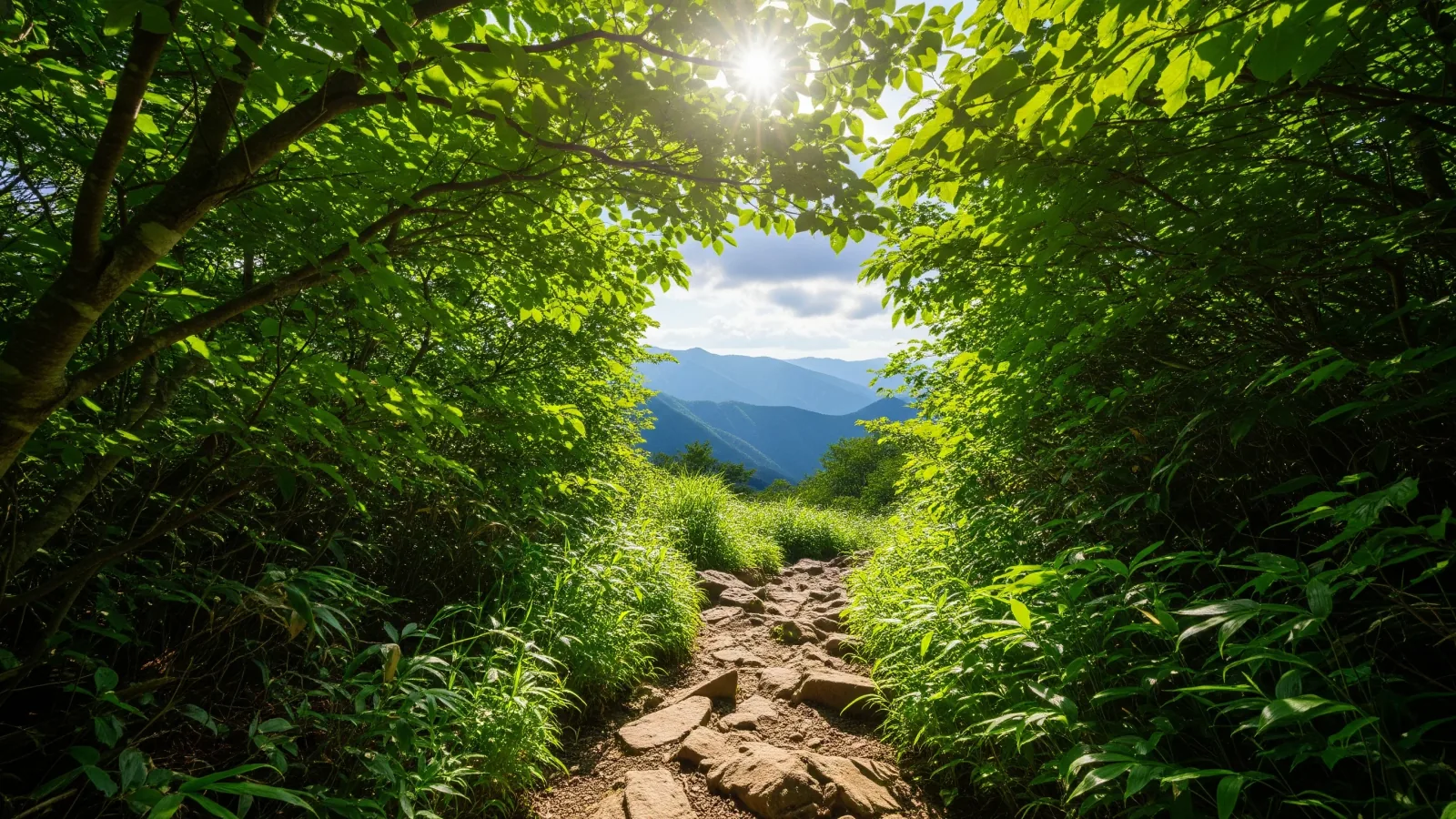
Did you know that "I'll drink when I get thirsty" is already a warning sign on a hike? The hydration habits you can get away with in normal life can turn into a real safety problem in the mountains. This piece walks through how heatstroke and dehydration actually develop on a hike, and gives you the concrete when / what / how much — so your next outing can be safer and more comfortable.
Why hiking sets up heatstroke and dehydration easily
Plenty of hikers tell themselves "mountains are cool, I won't get heatstroke up there." The reality is that hiking lines up several conditions that make heatstroke and dehydration unusually likely.
First, hiking is a sustained aerobic activity. Even a normal day hike runs for several hours up to half a day or more. Your body sweats heavily and burns through energy for that whole time, and unlike in town there's no air-conditioned shop to duck into and no vending machine for a cold drink.
Second, the air gets drier as you climb. With elevation, humidity drops, and your body loses water through breath and skin without your noticing — what's called insensible loss. Because there's no visible sweat, you have no intuitive sense of the fluid disappearing.
On top of that, the weight of your pack and direct sun exposure stack onto the load. Carrying a pack uphill increases the work your body is doing, and on an exposed ridge there's nothing between you and the sun for hours. The wind feeling pleasant doesn't mean you aren't losing water — you definitely are.
One trap beginners fall into is "cloudy days don't cause heatstroke." That's wrong. If the temperature and humidity are high, the risk is real, and UV still passes through the cloud layer. Don't read the weather as a permission slip — drink on every kind of day.
Timing is the variable that actually matters
The single most important habit for avoiding dehydration is controlling drinking before you feel thirsty.
The standard reference point is that the human body starts to register thirst once it has lost around 2 % of body weight in water. By that point, performance has already begun to drop. On a mountain, dropping performance shows up as duller judgement, sloppier footwork, and a higher chance of a fall or slip. "I'm thirsty" is, in other words, slightly behind the right moment to do something about it.
So what does the timing actually look like? A widely recommended pattern:
- Before you start: before you even get to the trailhead, drink a cup or two of water steadily — over breakfast and on the way in.
- While moving: one sip every 15 to 20 minutes. Small, continuous intake — not occasional big gulps.
- On breaks: every rest is a deliberate water break. Drink even if you don't feel like you're sweating.
"A sip every 15 minutes" can sound annoying. The fix is a hydration system — a bladder with a drinking tube clipped over your shoulder — that lets you drink while walking. A bottle in a side pocket you can reach without stopping works fine too, as long as you actually build the habit of reaching for it.
What to drink, and how much
Hydration isn't just "drink lots of water." Heavy sweating loses fluid and electrolytes — sodium in particular together. Drinking only water in large quantities can dilute the body's electrolyte balance enough to cause hyponatraemia (low blood sodium) — actually making you worse, not better. It's a piece of knowledge that's surprisingly under-the-radar and surprisingly important.
Practically, a good baseline is to combine water with sports drinks or oral rehydration solutions that carry electrolytes. Some hikers dilute sports drinks, which is fine, but diluting too far defeats the electrolyte purpose — keep it in a reasonable range. Salt tablets or salted candies, paired with water, are another workable approach.
On amount: a widely used rough formula for hiking water needs is:
Water needed (ml) = body weight (kg) × hours moving × 5
For a 60 kg hiker out for 5 hours: 60 × 5 × 5 = about 1,500 ml as a rough target. The number is a reference point — temperature, humidity, elevation gain, individual sweat rate, and how you're feeling that day all shift it. In summer or on routes with sustained steep climbing, you can easily need more. Conditions vary, so carry more than you think you need by default.
Whether there are water sources or huts along your route also changes how much you need to carry. Looking up the water-source information for the route ahead of time is the first step of a safe plan.
Catching the early signs of dehydration
Even with everything in place, conditions or a bad day can still push you into dehydration. The thing that matters is recognising the early signs and responding before they escalate.
Common early signs of dehydration include:
- Darker urine: pale yellow at the trailhead is fine; if it's a deep yellow or close to brown, you're already running low.
- Headache or dizziness: the symptoms overlap with altitude sickness and aren't trivial to tell apart. Start by replacing fluids and electrolytes — that's the basic response.
- Leg cramps (calf cramps): often related to electrolyte shortfall.
- Disproportionate fatigue or fading concentration: the body's way of signalling that it would rather not keep going.
If a hiking partner shows these symptoms, get them into shade and out of the heat, and have them sip fluids and electrolytes — slowly. If symptoms don't improve, or consciousness is starting to slip, call for rescue without delay. Field response is a stopgap; defer to a doctor or qualified professional for the actual treatment.
Summary
Pulling it together, the heatstroke-and-dehydration playbook for hiking comes down to: drink before you feel thirsty; pair water with electrolytes, not just water alone; use body weight × hours × 5 ml as a baseline and carry more than that. And drop the "it's cloudy, I'll be fine" / "the mountains are cool" framings — make small, frequent drinking a default habit in every condition.
If you know the early signs of dehydration, you can catch them in yourself and — just as importantly — in the people you're walking with. Safe hiking is built out of small, correct habits stacked on top of each other. Hoping your next hike is one you finish smiling.