
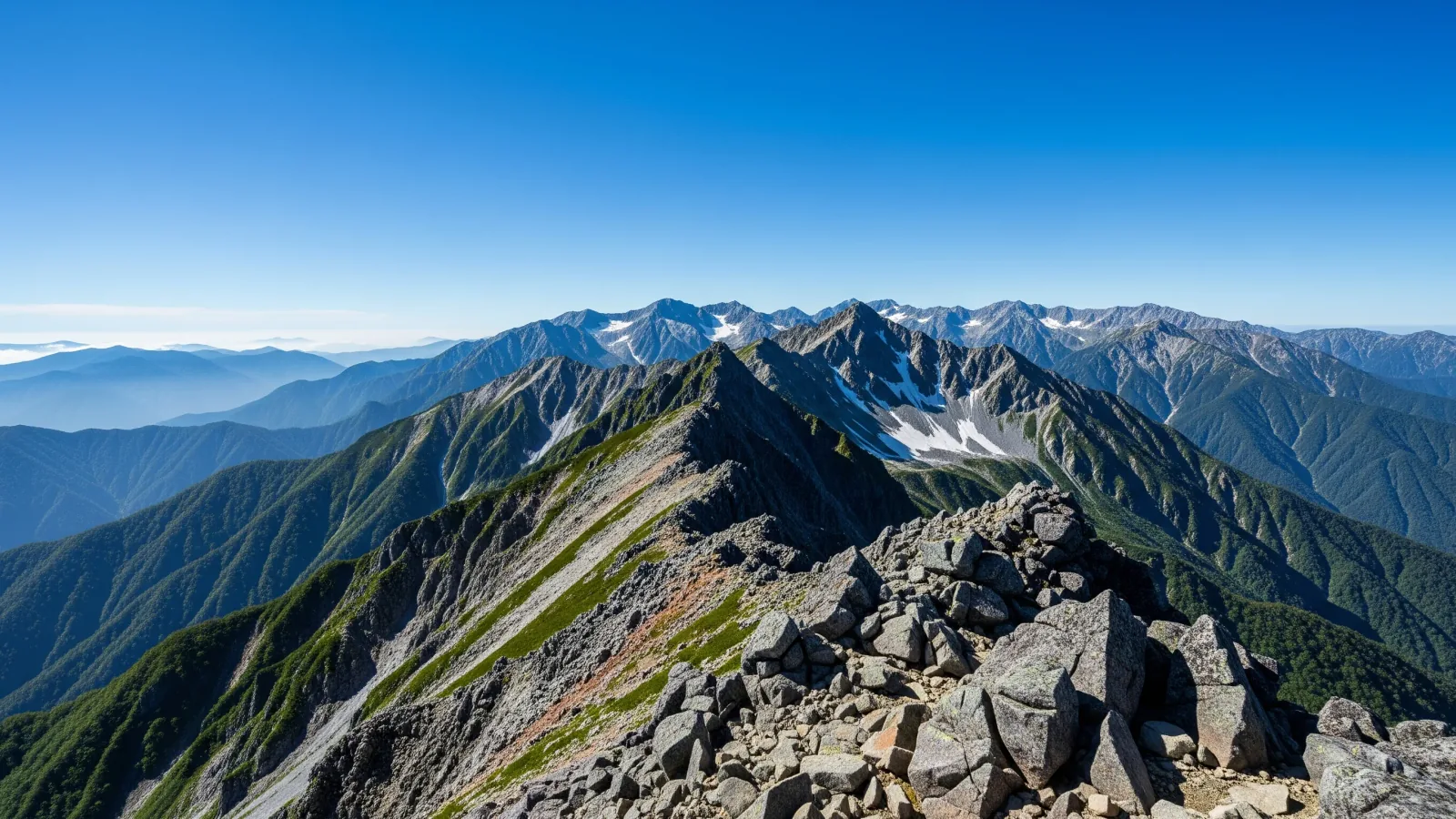
When you hear "altitude sickness," do you assume it only happens in the Himalayas or the Andes? In fact, it happens on hikes inside Japan too. Mt. Fuji is the obvious case, but plenty of hikers on the ridges of the Northern Alps get hit by headaches and dizziness as well. There's also a stubborn myth that altitude sickness "only happens to people who aren't fit." That isn't true — it can strike anyone regardless of fitness or experience. This guide walks through the mechanism behind it, concrete prevention steps, and what to actually do when symptoms appear up high.
Why altitude sickness happens in the first place
Altitude sickness isn't really an illness — it's an umbrella term for symptoms that appear when your body can't keep up with a low-oxygen environment. As elevation rises, atmospheric pressure drops; the percentage of oxygen in the air stays the same, but the amount your body can actually take in falls. Sea-level pressure is about 1013 hPa, but at 3,000 m it drops to roughly 700 hPa, and your body has access to only about 70 % of the usable oxygen (the exact figure varies with conditions).
In response, your body breathes faster and raises your heart rate to compensate. But if you gain altitude too quickly, this acclimatization can't keep up. That gap is what altitude sickness really is.
One common misconception worth clearing up: "young, fit people don't get altitude sickness." That's not how it works. Susceptibility depends less on fitness than on individual physiology, how you're feeling that day, and — most of all — the pace at which you climb. In fact, people who are confident in their fitness often push the pace, gain altitude too fast, and end up developing symptoms because of that very confidence.
Symptoms — how to tell it apart from ordinary fatigue
Altitude sickness has three broad stages of severity.
Mild: Acute Mountain Sickness (AMS)
Risk generally starts to rise above around 2,500 m, with symptoms typically appearing 6–12 hours after reaching altitude. The main symptoms are:
- Headache (the most common, and usually the first to appear)
- Nausea and loss of appetite
- Dizziness and general malaise
- Sleep disturbance (trouble falling asleep, waking repeatedly through the night)
These are easy to mistake for plain tiredness. The key tell is whether a headache is involved. Normal hiking fatigue eases when you rest; an altitude-related headache typically won't improve until you lose elevation.
Severe: HAPE (pulmonary edema) and HACE (cerebral edema)
If mild symptoms are ignored and you keep climbing, the condition can progress to life-threatening forms.
- HAPE (High-Altitude Pulmonary Edema): shortness of breath even at rest, persistent cough, and cyanosis (lips or nails turning blueish-purple).
- HACE (High-Altitude Cerebral Edema): severe headache, ataxia (inability to walk a straight line), and altered consciousness.
If these appear, you need to lose altitude as fast as possible. If you can't descend on your own, call for rescue immediately.
Note: symptoms vary significantly between individuals, and the above is a general guideline. If you feel anything unusual, defer to a doctor or medical professional.
Practical prevention strategies
Prevention beats treatment by a wide margin. The strategies below are recommended in the clinical practice guidelines of the Wilderness Medical Society (WMS) and similar bodies.
① Climb slowly — your single biggest lever
The core of prevention is controlling your rate of ascent. Above 2,500 m, the standard recommendation is not to raise your sleeping altitude by more than 500 m per day. For Mt. Fuji, simply spending 1–2 hours at the 5th station (~2,300 m) acclimatizing before starting to climb meaningfully reduces your risk.
It's natural to feel rushed when someone else is already pushing ahead, but in the context of altitude sickness, climbing faster gives you zero benefit.
② Drink water frequently
At altitude your breathing rate goes up and the air is drier, so you lose water faster than you realize. Dehydration is known to increase the risk of altitude sickness, so drink before you feel thirsty. A general guideline is to consciously aim for more than usual — commonly cited as 2–3 liters per day (varies with conditions).
③ Sleep well and arrive in good shape
Poor sleep or drinking the night before are both known risk factors. If you're heading to a high mountain the next morning, rest properly the night before. "The climb starts the day before" is a useful mindset.
④ Breathe deeply and deliberately
At higher elevations, consciously taking deep, slow breaths increases the amount of oxygen you're pulling in. Even just focusing on a long exhale while walking is reportedly effective.
Note: prescription drugs (e.g., acetazolamide) can also be used preventively, but they are not over-the-counter. Talk to a doctor in advance if you're considering them.
If symptoms appear on the mountain — three iron rules
No amount of prevention is 100 % effective. What matters most is responding correctly once symptoms appear.
Rule 1: Don't gain any more altitude. The instant you feel a headache, dizziness, or other warning signs, stop where you are. The most dangerous thought is "the summit is just a bit further."
Rule 2: If symptoms don't improve, descend. If resting at the same altitude doesn't help, descent is the best treatment. Losing 300 to 1,000 m of elevation is generally enough to relieve symptoms.
Rule 3: Tell your companions — don't decide alone. Altitude sickness can impair your judgment. You may feel "fine" while looking visibly unsteady from the outside. Communicate any changes early. Refusing to push through alone is a behavior that saves lives.
One thing to be careful with: painkillers. OTC headache medication can temporarily mask the pain, but it doesn't treat the underlying altitude sickness. If you suppress the symptom and keep climbing, the condition can deteriorate rapidly later. Treat medication as a stopgap — the real treatment is descent.
Note: for first aid and medication use, defer to a doctor or qualified professional.
Summary
Altitude sickness can affect anyone at altitude, regardless of fitness or experience. The two things that matter most are climbing slowly enough for your body to acclimatize and having the courage to lose altitude when symptoms appear. Knowing the warning signs — and knowing how to respond — protects not just you, but everyone you're climbing with.
On the mountain, having reliable information and advice from people who've been there changes the decisions you make. Gather current conditions for the area ahead of time, plan with margin, and enjoy a safer climb.