
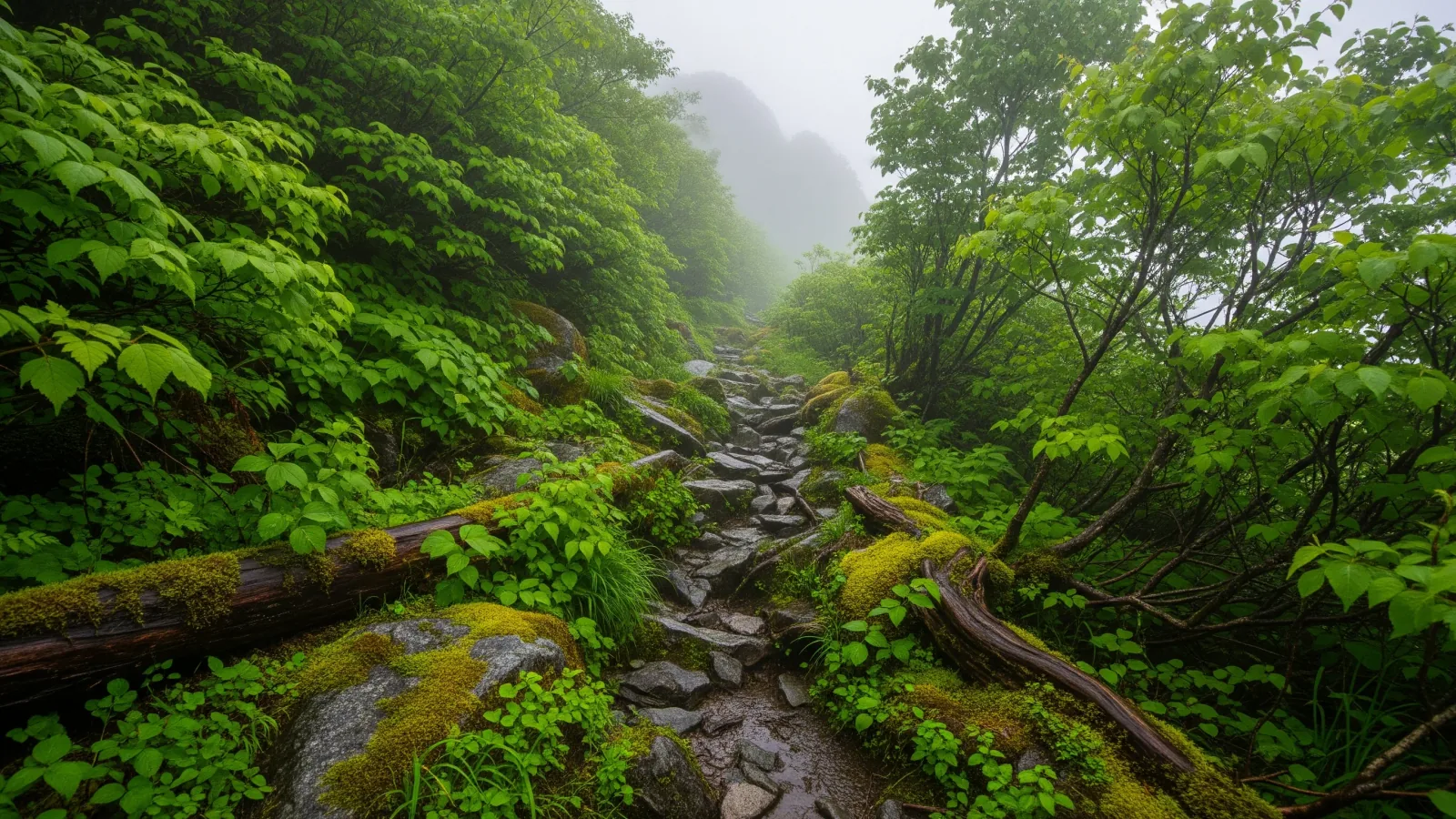
Hearing that someone froze on a midsummer hike sounds wrong. You left a city at over 30 °C and somewhere up on the mountain you couldn't stop shivering from the core. It really happens. Hypothermia is not a winter-only story. This piece explains how it can develop on a summer mountain — the mechanism, and the concrete things you can do to prevent it.
What hypothermia is — what's happening inside the body
Hypothermia is the condition where core body temperature falls below 35 °C. The human body normally regulates around 37 °C, and when the rate at which heat is being pulled out of the body exceeds the rate at which it can produce heat, that regulation breaks down.
The most common misconception is that hypothermia requires sub-zero temperatures. It doesn't. Hypothermia incidents on mountains happen routinely in 10–15 °C ambient temperatures. Japan's National Police Agency mountain-accident statistics show "fatigue / hypothermia" as a recurring cause of incident in the summer hiking season, year after year.
When core temperature starts to drop, the first thing you get is violent shivering. That's the body using muscle activity to produce heat — it's the defence reflex. If the temperature keeps falling, the shivering stops, judgement clouds, and eventually consciousness fades. By that point, self-rescue is essentially out of reach.
Why it happens in summer — the three ways heat leaves you
Summer hypothermia in the mountains has a structure: three mechanisms that take heat out of you, stacked on top of each other.
1. Temperature drops with altitude
As a rough rule, air temperature drops by about 0.6 °C for every 100 m of elevation gain (conditions vary). Which means: 30 °C at the trailhead becomes around 15 °C on a 2,500 m ridge. People reasoning from the city heat — "it's summer, I'll be fine" — walk straight into cold they weren't expecting.
2. Wind crashes your felt temperature
Strong wind is normal on a mountain ridge. As a rough reference, each 1 m/s of wind drops your felt temperature by roughly 1 °C (the effect varies with speed and air temperature). 15 °C ambient plus 10 m/s of wind feels like around 5 °C. Summer hiking clothing isn't built for that.
3. Wet clothing — the most lethal of the three
Of the three, wet is the worst. Water pulls heat off the body roughly 25 times faster than air. Caught in a sudden summer rain at altitude, without proper waterproofing, then hit by wind — core temperature drops at a startling rate.
Where cold, wind, and wet stack up together is the classic afternoon thunderstorm on a summer mountain. You sweat through your shirt under clear morning skies, then get hit by sudden rain and wind in the afternoon. The already-damp clothing accelerates the cooling further — that combination is the textbook setup for summer mountain hypothermia.
"I'm fine" is the most dangerous moment — early signs to know
What makes hypothermia particularly dangerous is that the person experiencing it is often the last to notice. Reduced judgement is part of the syndrome itself. By the time you genuinely think "I'm still OK," your core temperature can already be in the danger zone.
Signs to watch for:
- Uncontrollable shivering: the body's alarm is going off. Catch it at this stage and the prognosis is generally good.
- Fingers no longer work properly: can't undo your pack's buckle, can't zip a jacket.
- Speech goes off: slurring, answering questions sideways from what was asked.
- Walking becomes unsteady: more tripping, can't walk a straight line.
This is especially dangerous on a solo hike, because you don't have a partner who can read your symptoms from outside. The working assumption to take into a solo summer hike is: the moment you start thinking "it's a bit cold," assume the temperature drop has already started, and respond immediately.
Note: the right field response to suspected hypothermia varies significantly with the situation. Follow medical or qualified specialist guidance, and ideally take a wilderness-medicine course in advance.
What you can do about it, even in summer
Prevention boils down to two principles: don't get wet, don't let heat escape.
Pack a warm layer. Even in summer, throwing a lightweight insulating piece into the bottom of the pack changes your risk profile substantially. Rain gear is non-negotiable — it's your wind shell as well as your rain barrier. "The forecast was sunny" is not an exception. Carry it anyway.
Manage wet, actively, while you walk. Sitting down for a break in a sweat-soaked shirt is the fastest way to drop your temperature. Adjust layers before you stop, change out of a soaked base layer, take breaks somewhere out of the wind. Choosing quick-drying fabric is the basic version of the same principle.
Plan your day around afternoon storms. On a summer mountain, weather tends to deteriorate in the afternoon. Start early, get the ridge done before noon — that single planning decision avoids the highest-risk window of the day. And if a sudden change of weather looks likely, call the descent early.
Don't skip the snacks. Generating body heat costs energy. Hiking on an empty stomach drops your ability to produce heat, which raises hypothermia risk directly. Eating trail snacks regularly is genuinely part of staying warm — not just calorie management.
Summary
Hypothermia doesn't belong to winter. Stack "temperature drop," "wind," and "wet," and your core temperature can crash into the danger zone in the middle of summer. The 10–15 °C ambient temperature, plus rain, plus wind combination is something a high summer mountain can absolutely produce.
What matters is letting go of the "it's summer, light kit is fine" mental model. Carry an insulating layer and rain gear without exception, and respond early to changing weather. The weather changes fast in the mountains, and conditions are not the same on different days. Always check the latest forecast and on-the-ground reports before you leave.