
Who Walter Weston was
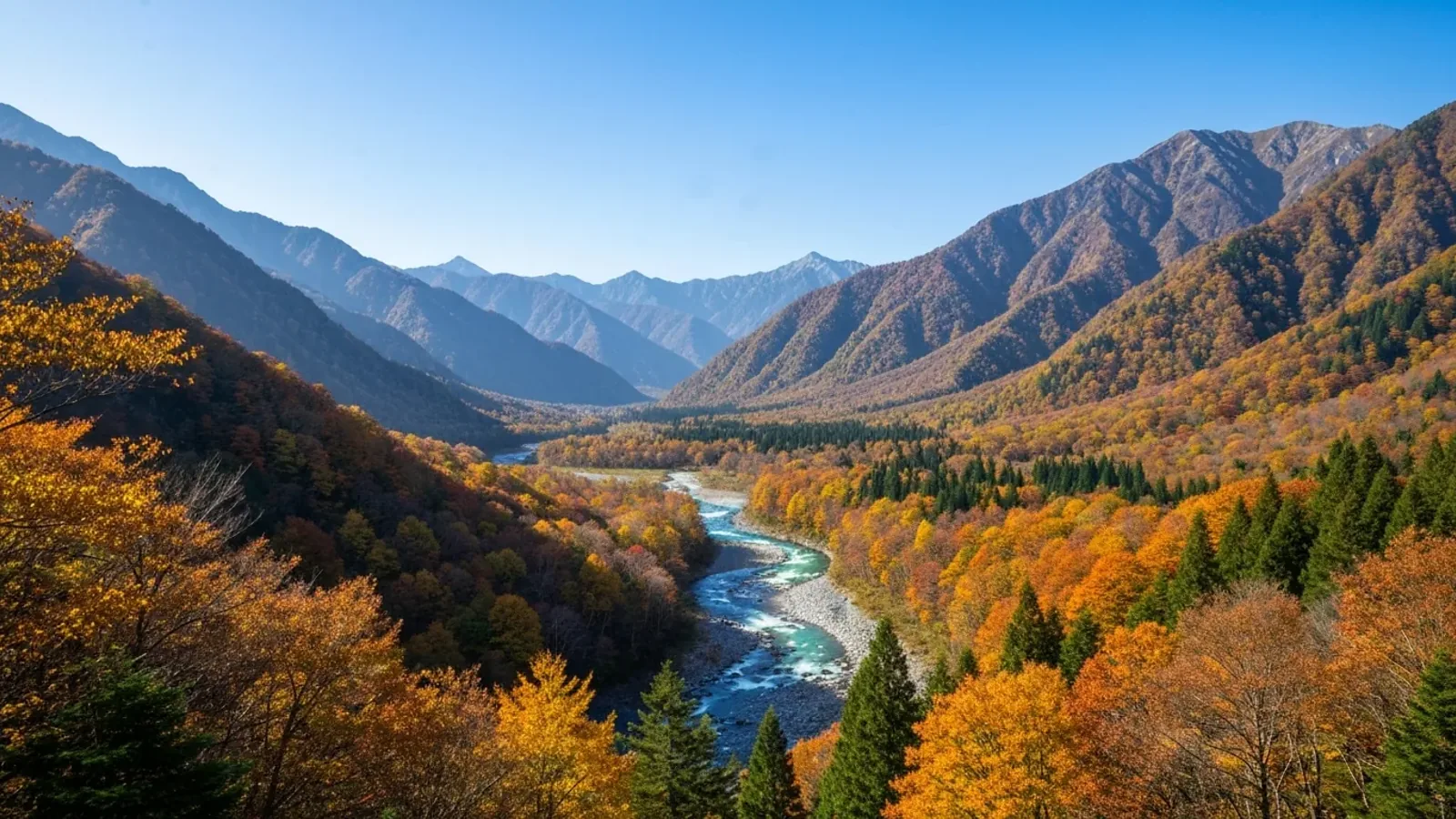
If you walk along the Azusa River from the Kamikōchi bus terminal, sooner or later you come on a small bronze relief set into the riverbank. The calm profile of a gentleman gazing up at the mountains — this is the memorial to Walter Weston (1861–1940).
Weston came to Japan in the Meiji era as a missionary of the Church of England, climbed Japanese mountains tirelessly, and used the book he wrote about that experience to introduce the name "Japanese Alps" to the world. He came to be called the father of the Japanese Alps, and the father of modern Japanese mountaineering.
But Weston was no mere adventurer. He carried out his work as a missionary while becoming deeply involved in the development of Japan's mountain culture, and his contribution is still remembered every June at the Weston Festival in Kamikōchi. This piece follows Weston's life, and the mark he left on the history of climbing in Japan.
Arrival in Japan and the pull of the mountains (1888–1895)
Walter Weston was born in 1861 in Derby, in the English Midlands. He studied theology at Clare College, Cambridge, and as a missionary with the Church Missionary Society (CMS), first arrived in Japan in 1888 (Meiji 21), aged 27.
His posting was Kobe. Weston had grown up walking in the Swiss Alps, and almost as soon as he arrived in Japan he was on the local mountains — Mt. Rokkō and others nearby. The scale of the Japanese mountain country pulled him in, and between missionary duties he began travelling further out to climb.
The scope of his climbing
Weston's climbing output was extraordinary. In just four years between 1891 and 1894, the records show more than 40 summits. A partial list:
- Mt. Yari (3,180 m) — climbed in 1892. Foreign ascents at that point were extremely rare.
- Mae-Hotaka (3,090 m) — onto the sharp rocky ridges of the Hotaka range.
- Mt. Fuji — the highest peak in Japan, climbed as well.
- Mt. Ontake, Mt. Norikura, Mt. Yake — through the main peaks of the Hida range, one after another.
Japanese mountains in this era had no maintained trails, the maps in circulation were inaccurate, and there were essentially no huts. Weston hired local hunters and woodcutters as guides, bushwhacked through tangled forest, and forced his way to the summits. Climbing in this period was risky, slow, and physically punishing in a way that has almost no modern equivalent.
Meeting the great guide — Kamonji Kamijō
No telling of Weston's climbing life is complete without Kamonji Kamijō (1847–1917). Born and raised in Kamikōchi, Kamonji was a hunter who knew the mountains intimately, from the inside.
In 1893 (Meiji 26), Weston hired Kamonji as a guide for a climb of Mt. Yari. That meeting changed both of their lives.
Kamonji had extraordinary stamina, an unerring sense of direction, and the ability to read the weather. Weston was deeply impressed and wrote about him repeatedly in his books. The exchange went both ways: Kamonji, by all accounts, picked up Western climbing techniques and a Western posture toward the mountains from Weston.
The partnership continued until Weston left Japan for the last time. Kamonji Lodge (Kamonji-goya) still stands in Kamikōchi today, and Kamonji's own legacy is carried alongside Weston's.
Sending Japan's mountains to the world — the book that changed everything
Weston returned to England in 1895, and the following year, in 1896, published Mountaineering and Exploration in the Japanese Alps in London. This is the book that put the mountains of Japan into the eye of the wider world for the first time.
Inside, Weston laid out the record of his climbing in vivid prose: the fight up steep rock, the encounters with local people, the long soaks in mountain hot springs, the views from the summits. For a Western reader, it was the first real account of what was up there in the Japanese ranges.
The name "Japanese Alps"
The convention of grouping the Hida, Kiso, and Akaishi ranges together under the name "Japanese Alps" predates Weston. The British mining engineer William Gowland used the phrase in 1881, and the British chemist Ernest Satow adopted it after him.
What Weston's book did, beyond question, was carry the name worldwide. With "Japanese Alps" on the cover itself, the term took root quickly among climbers and travellers in Europe and America. Weston is not the person who coined the name — but he is the person who, more than anyone else, established it.
Weston went on to publish further books on Japan, including The Playground of the Far East (1918) and A Wayfarer in Unfamiliar Japan (1925).
Founding the Japanese Alpine Club, with Weston's hand in it
Weston's contribution wasn't only in the books. He was also directly involved in the founding of a modern Japanese alpine institution.
As a member of the (British) Alpine Club, Weston understood the value of an organised climbing community. He saw that Japan needed the same, and pushed the keenest Japanese climbers he knew to make one.
Encouraged by Weston, the writer Usui Kojima took the lead, and the Japanese Alpine Club was founded in 1905 (Meiji 38). It was the first serious alpine organisation in Japan, and it remains the country's largest today.
The founding of the Japanese Alpine Club is the hinge on which Japanese climbing turned — from "climbing as religious pilgrimage and ascetic practice" toward "modern climbing as sport and recreation." Weston is the catalyst that helped that turn happen.
Second and third stays in Japan (1902–1915)
Weston came back to Japan three separate times across his life.
- First stay (1888–1895) — based in Kobe, balancing missionary work with climbing. Over 40 summits.
- Second stay (1902–1905) — based in Yokohama. Pushed for the founding of the Japanese Alpine Club.
- Third stay (1911–1915) — back in Yokohama. Continued climbing and writing on Japan.
All together, that's roughly 15 years of his life lived in Japan.
His wife Frances on Mt. Yari
Weston's wife Frances Weston, who accompanied him on the third stay, was a serious climber in her own right. In 1913 (Taishō 2), Frances is recorded as having become the first foreign woman to summit Mt. Yari. A married couple climbing together would have been a fresh sight in early-20th-century Japan.
An early piece of rock climbing
In 1904 (Meiji 37), Weston is also recorded as having attempted what is generally regarded as Japan's first piece of technical rock climbing — on the Jizō-dake obelisk in the Hō'ō range. A missionary on a rock pitch was, in its way, a perfect distillation of the modern-climbing idea — that the act of climbing has worth in itself.
What Weston left behind
When Weston left Japan for the last time in 1915, he returned to England, kept working as a priest, and went on writing about Japan. His contribution was formally recognised: in 1937 (Shōwa 12) he was awarded the Order of the Sacred Treasure, Fourth Class.
On 27 March 1940 (Shōwa 15), Weston died of a stroke at 78. It was the middle of the Second World War and relations between Britain and Japan had collapsed — and yet the mark he had left on Japanese mountain culture did not vanish with the political weather.
The Weston Festival — every June, in Kamikōchi
Weston's contribution is honoured each year at the Weston Festival, held on the first Sunday of June at Kamikōchi. Climbers gather at his bronze relief beside the Azusa River; flowers are laid, and talks on the mountains are given.
The relief was installed in 1937, largely on the initiative of the Japanese Alpine Club. The next time you're in Kamikōchi, it is worth stopping for a minute in front of it and looking at the calm profile of the English missionary who carried Japan's mountains out into the world.
His mark on the present
More than a century on, the influence Weston brought is still visible.
- The Japanese Alpine Club — founded 1905, still the country's largest alpine organisation.
- The name "Japanese Alps" — internationally established, still pulling climbers from overseas.
- Kamikōchi as a destination — first put on the international map by Weston's book, now one of Japan's flagship mountain resorts, with more than 1.5 million visitors a year.
- Modern climbing as an idea — Weston helped settle the concept of climbing as sport into the Japanese mountain culture.
Summary
Walter Weston was that rare figure: a missionary by profession, captivated by the mountains of his host country, and the one person who carried them into the wider world.
- Born in Derby, England, in 1861. First arrived in Japan as a Church of England missionary in 1888.
- Over 40 summits in four years. Met the great guide Kamonji Kamijō.
- His 1896 book put "Japanese Alps" on the international map.
- Major contributor to the founding of the Japanese Alpine Club (1905).
- Three separate stays in Japan, roughly 15 years in total. Received the Order of the Sacred Treasure in 1937.
- The Weston Festival in Kamikōchi keeps his legacy alive every June.
If you find yourself in Kamikōchi, stop in front of Weston's relief for a moment and spend a thought on the English missionary who roamed the Meiji-era Japanese mountains, and the work he quietly left behind.